Cambodian food doesn't get the international attention it deserves. Overshadowed by its neighbours — Thai cuisine to the west, Vietnamese to the east — Khmer cooking is frequently overlooked by travellers who pass through without stopping long enough to eat properly. That is a genuine loss, because at its best, Cambodian food is subtle, fragrant, and deeply satisfying in a way that rewards patience and curiosity.
In Stung Treng, eating well is easy. The town is small enough that the best places are known to everyone, and the proximity to the Mekong means that fresh river fish is central to almost every meal. This is not tourist restaurant food. This is how people actually eat in northeastern Cambodia — and if you spend a few days here and eat the way locals eat, you will leave with a genuinely different understanding of Khmer cuisine.
The Foundation — Rice, Fish, and Prahok
Cambodian cuisine is built on three pillars: rice, freshwater fish, and prahok. Understanding these three things will help you understand almost every dish you encounter in Stung Treng.
Rice is not a side dish in Cambodia — it is the meal. Everything else on the table is, technically, accompaniment. Cambodians eat rice at every meal, including breakfast. The jasmine rice grown in Cambodian fields is genuinely excellent — fragrant, slightly sticky, and a world away from the anonymous long-grain rice served in tourist restaurants elsewhere.
Freshwater fish from the Mekong is the primary protein in Stung Treng. The river provides an extraordinary variety — snakehead fish, catfish, carp, and dozens of smaller species that are grilled, steamed, stewed in soups, or fermented. Fish caught in the morning appears on lunch tables by midday. The freshness is noticeable.
Prahok is fermented fish paste — Cambodia's most essential and most misunderstood ingredient. It has a powerful, funky smell that surprises most first-time visitors, but in cooking it functions like an umami base, adding depth and complexity to sauces, soups, and dips. If a dish tastes particularly savoury and rich in a way you can't identify, prahok is almost certainly involved.
"Fresh river fish from the Mekong appears on lunch tables by midday. The freshness is immediately noticeable."
Dishes to Try in Stung Treng
Num Banh Chok — Khmer Noodles
The Cambodian breakfast. Fresh rice noodles topped with a green fish-based curry sauce, raw vegetables, banana blossom, and fresh herbs. It is light, aromatic, and completely addictive. The morning market in Stung Treng serves it from around 6:00 AM until it runs out — usually by 9:00 or 10:00. It costs roughly 2,000–3,000 riel (less than $1 USD) per bowl. This is the single most important meal to eat in Cambodia and the morning market version in Stung Treng is as good as any in the country.
Amok Trey — Fish Amok
Cambodia's national dish. Freshwater fish steamed in a coconut milk and kroeung (lemongrass paste) sauce, typically served in a banana leaf cup. The texture is somewhere between a mousse and a curry — silky, fragrant, and gently spiced. The version made with Mekong fish in Stung Treng has a sweetness and freshness that's difficult to replicate elsewhere. Order it anywhere you see it.
Samlor Machu — Sour Soup
A tamarind-based sour soup with fish, tomatoes, pineapple, and fresh herbs. It is simultaneously sour, savoury, slightly sweet, and deeply refreshing — particularly welcome in the heat of the day. Every family has their own version. The soups served at small riverside restaurants in Stung Treng, made with the morning's catch, are exceptional.
Grilled River Fish
The simplest and often the best thing you can eat in Stung Treng. A whole fish — snakehead or catfish — rubbed with lemongrass and galangal, grilled over charcoal, and served with steamed rice, fresh herbs, and a dipping sauce of lime juice, fish sauce, chilli, and sugar. No complexity. No technique to explain. Just an excellent fish cooked well, eaten beside a river. This is what lunch looks like on our full-day tours.
Lok Lak — Stir-fried Beef
Tender cubes of beef stir-fried in a dark, slightly sweet sauce and served on a bed of lettuce and tomatoes with a dipping sauce of lime juice, black pepper, and salt. It is one of the most universally loved Cambodian dishes and found everywhere in Stung Treng. A reliable choice if you are eating somewhere for the first time and want something familiar but distinctly Khmer.
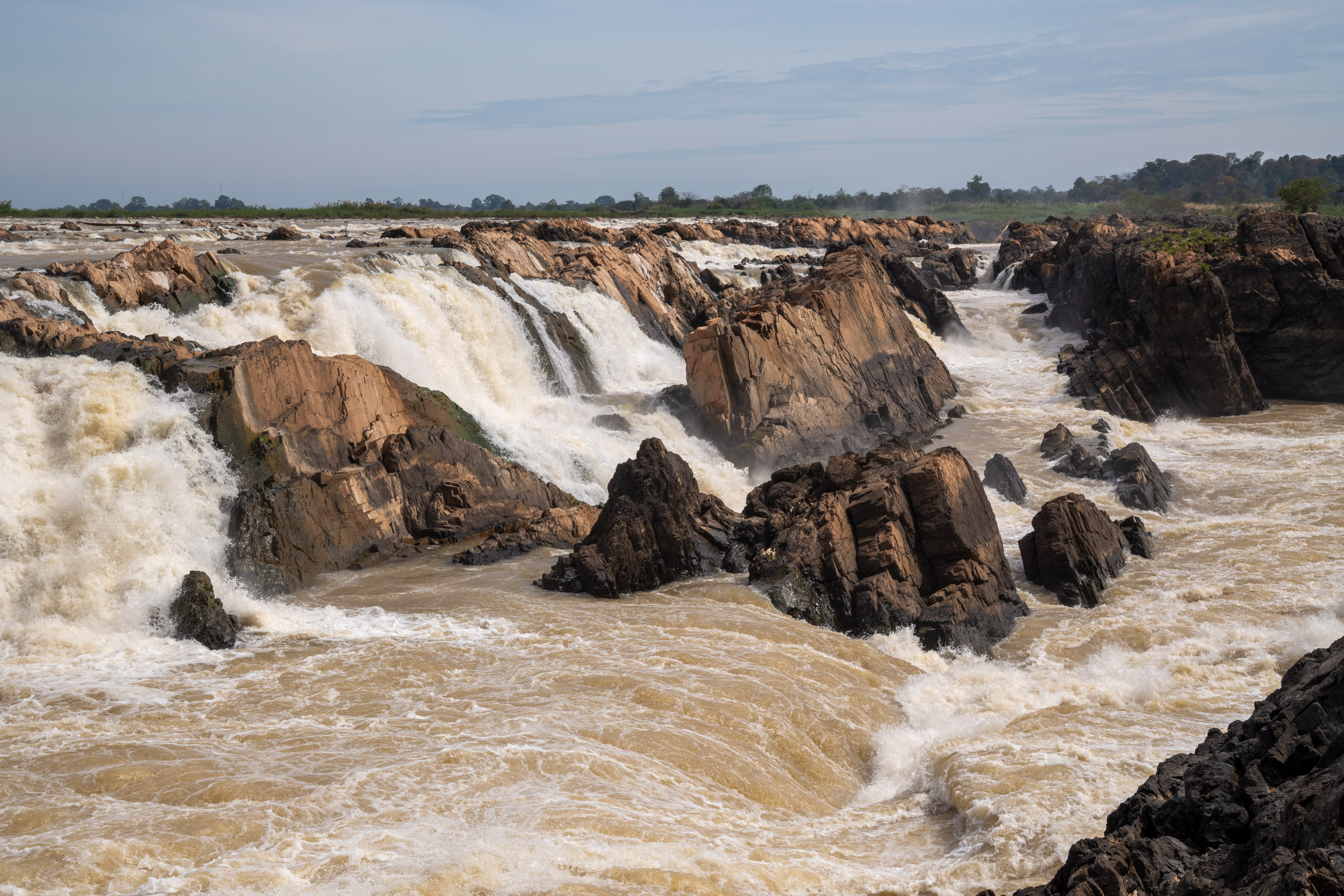
Lunch on our full-day Waterfalls tour is prepared fresh by a local family beside the river
Where to Eat in Stung Treng
The Morning Market
The most important food destination in town. The market runs from before sunrise until mid-morning and is where locals buy fresh produce, fish, and prepared food. The num banh chok stalls are at the back — follow the smell of fish curry and the sound of noodles being pulled. Eat here on your first morning and you will understand Stung Treng better than any guidebook can explain.
Riverside Restaurants
Several small restaurants line the Sekong River waterfront. They are informal — plastic chairs, laminated menus with photos, ceiling fans — but the food is genuinely good. Fresh fish is the strength of all of them. Order whatever fish the owner recommends that morning; it will be whatever came off the boat most recently.
Village Meals on Tour
The meals served during our full-day and multi-day tours are prepared by local families in their homes or at riverside cook stations. These are not restaurant meals — they are home cooking, made from ingredients gathered that morning, cooked over wood fires, and served in the shade beside the river. Guests consistently describe these as among the best meals they ate in Cambodia. There is no menu. You eat what the family cooks. It is always excellent.
Food Practical Tips
- 🍜 Breakfast: Go to the morning market for num banh chok before 9 AM
- 🐟 Best value: Fresh grilled fish at riverside restaurants — $3–5 USD
- 🌶 Spice: Khmer food is milder than Thai — ask for chilli on the side if you want heat
- 🥬 Vegetarian: Possible but requires communication — say "min dak sach" (no meat) clearly
- 💧 Water: Drink bottled water only — freely available everywhere for 500–1000 riel
- 💵 Prices: Expect to pay $2–6 USD per meal at local restaurants
A Note on Eating With Locals
The best food experiences in Stung Treng happen not in restaurants but in homes and at riverside stops during tours. When a local family cooks for you — when you sit at a low table on a mat beside the river and eat rice and fish and soup that was made an hour ago from ingredients gathered that morning — you are participating in something that most travellers to Cambodia never access.
This is one of the things we are most proud of at Kungkea. The meals on our tours are not catered — they are cooked by real families, using real recipes, eaten in real places. We pay those families fairly for their cooking. When you eat with us, your money supports the communities that make Stung Treng what it is.
Come hungry. Leave knowing what Cambodian food actually tastes like.